Safety in Relationships: Trans Folk

Consider your safety before reading. The booklet describes abuse and includes examples. An abusive partner may react negatively if they discover it. Access the resource when it is safe to do so, and consider your digital privacy and browsing history. If you are in immediate danger, call 911. In British Columbia you can also reach … Read more
Safety in Relationships: Same-Gender

Consider your safety before reading. The booklet describes abuse and includes examples. An abusive partner may react negatively if they discover it. Access the resource when it is safe to do so, and consider your digital privacy and browsing history. If you are in immediate danger, call 911. In British Columbia you can also reach … Read more
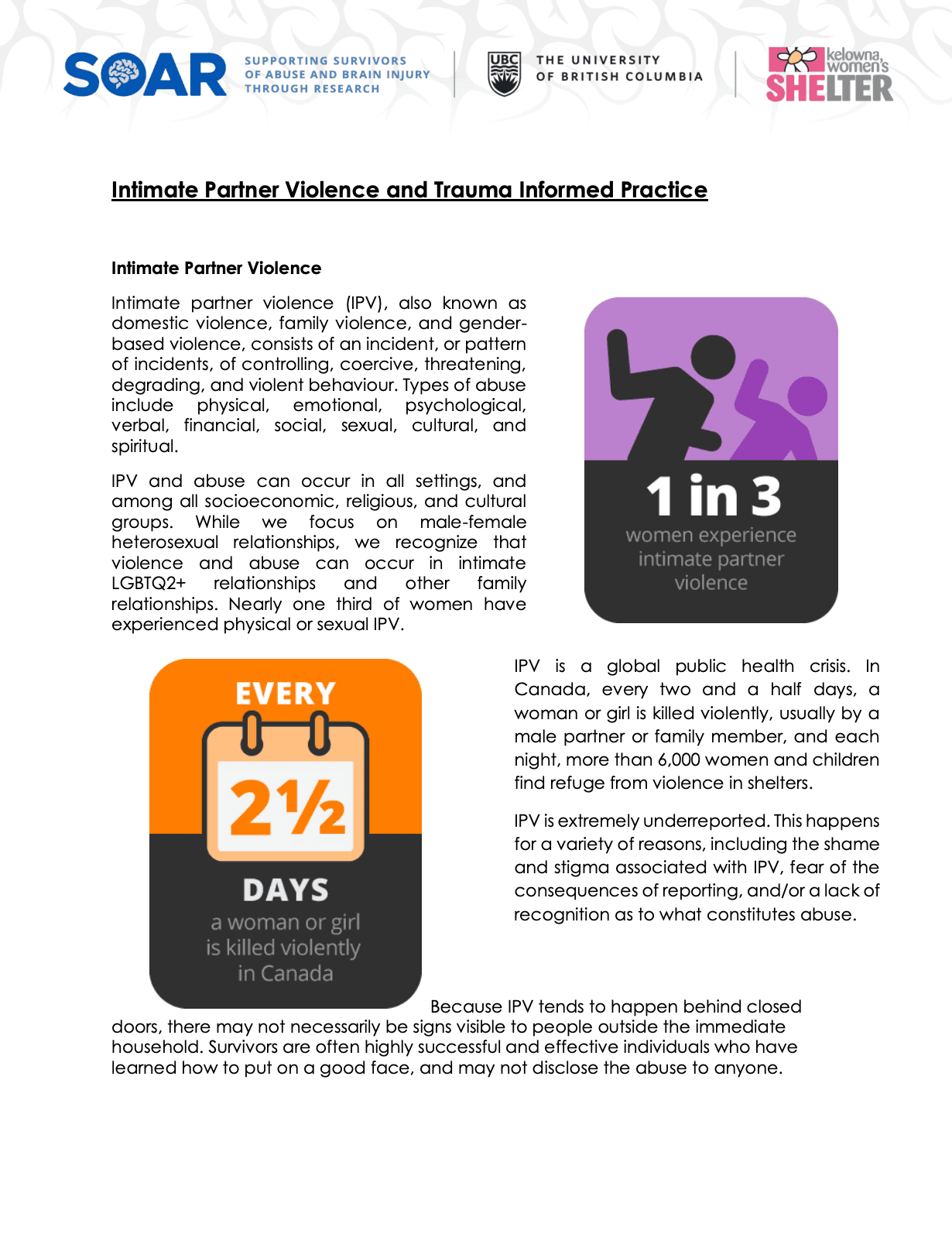
Intimate Partner Violence and Trauma Informed Practice

“Why doesn’t she just leave?” is a question many people ask about intimate partner violence (IPV).A better question is: Why does he hurt her? The Intimate Partner Violence and Trauma Informed Practice resource helps professionals and community members recognize intimate partner violence, understand why leaving can be difficult or dangerous, and respond in ways that … Read more

Intimate Partner Violence and Brain Injury: Fact Sheet

Nearly half of women in Canada face some form of intimate partner violence (IPV) in their lifetime. Research indicates up to 92 per cent of women survivors have signs of a brain injury. The Intimate Partner Violence and Brain Injury: Fact Sheet sets out the evidence on intimate partner violence-caused brain injury (IPV-BI), including key … Read more