
Up to 92 per cent of survivors of intimate partner violence may also have signs of a brain injury. Many have never been diagnosed.
If you work with survivors, you may already support people living with the effects of brain injury without knowing it. Symptoms can affect memory, communication, concentration, emotional regulation, and daily tasks. These changes can be mistaken for disengagement, difficult behaviour, or lack of cooperation.
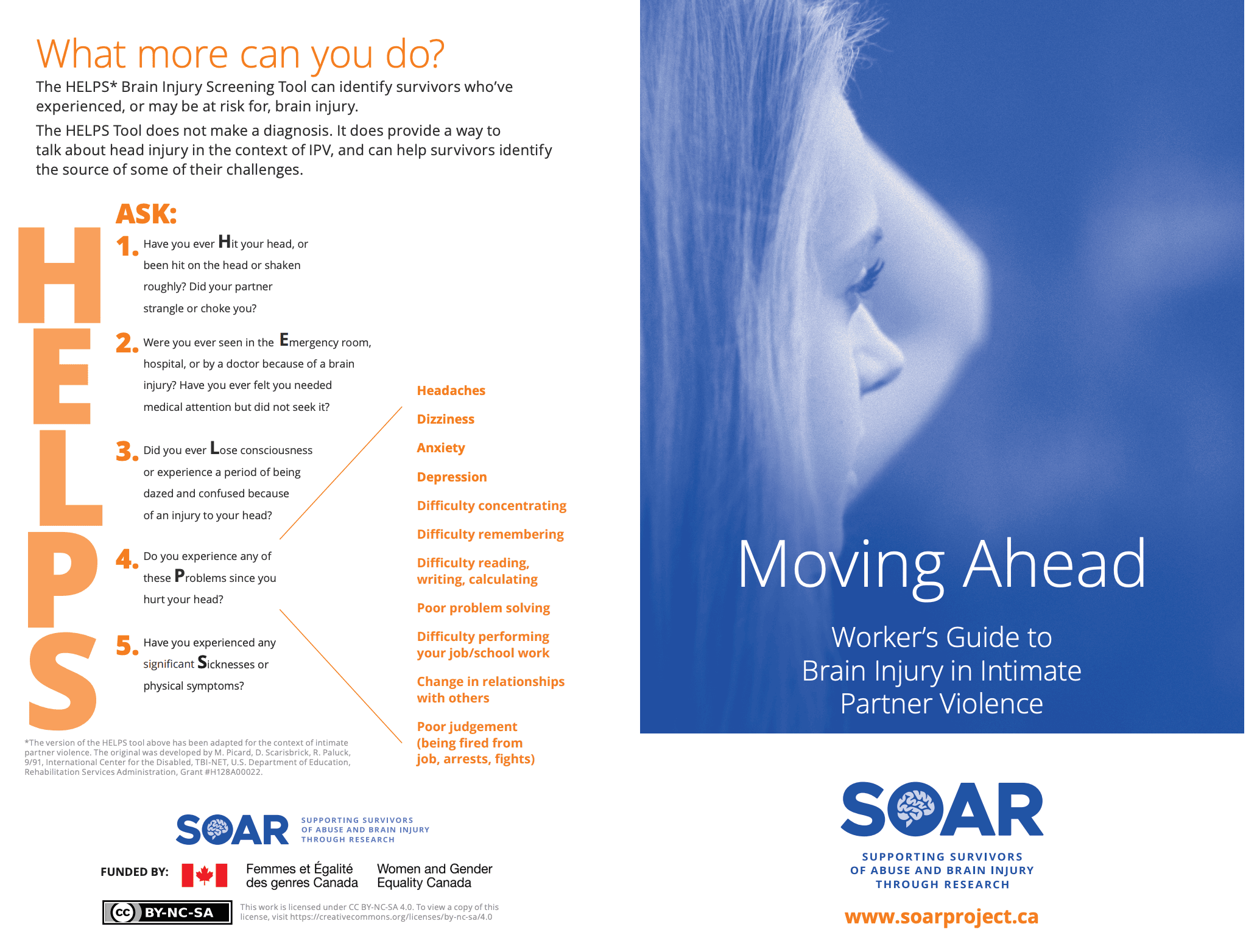
This free Moving Ahead: Worker’s Guide to Brain Injury in Intimate Partner Violence helps service providers in shelters, transition houses, victim services, and community agencies recognize possible signs of intimate partner violence-caused brain injury (IPV-BI), and adapt their approach to better support survivors.
What the guide covers
- How abuse can cause brain injury. Learn how blows to the head, neck and face, shaking, falls, and strangulation can cause brain injury, including injuries that may not be immediately apparent.
- Signs and symptoms to recognize. Understand how headaches, fatigue, dizziness, sleep problems, low mood, anger, trouble with light and noise, and communication difficulties may affect survivors.
- How brain injury can affect service access. Explore why survivors may struggle to follow conversations, remember instructions, attend appointments, complete forms, or manage busy and noisy environments.
- Practical ways to adapt your approach. Find simple strategies, such as speaking clearly, allowing extra time and breaks, meeting in quieter spaces, breaking instructions into manageable steps, and helping with paperwork.
- The adapted HELPS screening tool. Explore five questions designed to help service providers raise the possibility of a brain injury in the context of intimate partner violence.
Using the HELPS screening tools
The adapted HELPS tool is a conversation starter, not a diagnostic test. It can help service providers identify a possible history of head injury and explore whether symptoms may be affecting a survivor’s daily life.
If you suspect a survivor may have a brain injury, connect them with appropriate healthcare professionals and local brain injury services. Recent injuries or severe or worsening symptoms may require urgent medical assessment.
Recognize. Respond. Refer.
Recognizing possible brain injury can change how you interpret a survivor's behaviours, and how you provide support. Small adjustments to communication, the environment, and service delivery can help reduce barriers and create more accessible, survivor-centred care.
Download the guide and share it with your team to help build awareness of intimate partner violence-caused brain injury, and strengthen your practice.
Nearly half of Canadian women will go through intimate partner violence in their lifetime. Recognizing the brain injury behind the behaviour changes how you respond to it.
Recognize. Respond. Refer.
Supporting Survivors of Abuse and Brain Injury through Research (SOAR) is a registered charity and the only Canadian organization dedicated to intimate partner violence-caused brain injury. Through research, education and advocacy, we turn evidence into action.