
Consider your safety before reading. This page describes abuse and includes examples. An abusive partner may react negatively if they discover it. Read it when it is safe to do so, and consider your digital privacy and browsing history.
If you are in immediate danger, call 911.
If a partner has strangled or choked you, or put pressure on your neck, see a doctor right away. Do this even if you feel fine. Serious injuries can happen without visible marks or symptoms. Some complications may develop hours or days later.
Need support? Women’s Shelters Canada can connect you with services in your area.
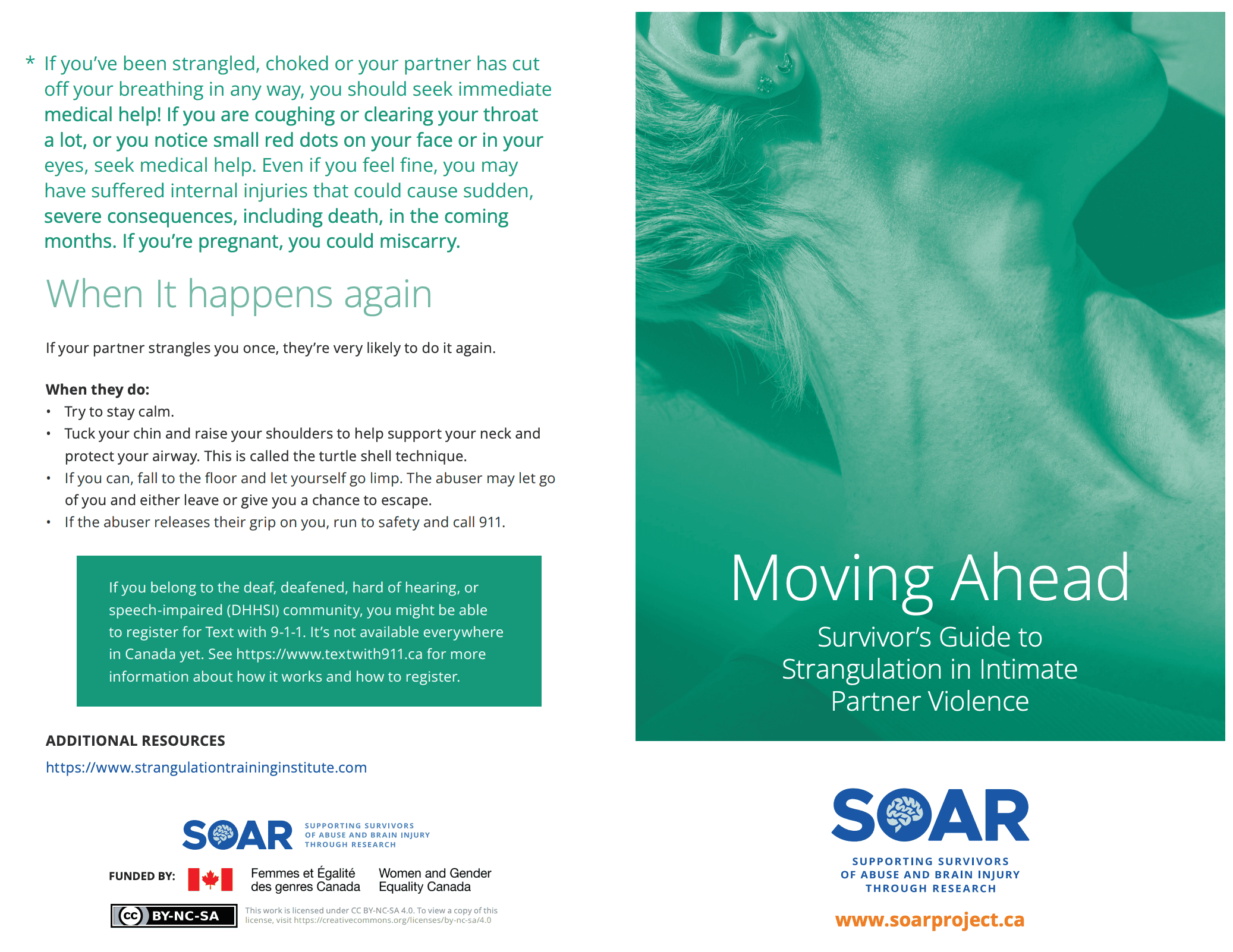
Strangulation is a dangerous form of intimate partner violence (IPV). It can cut off blood flow and oxygen to the brain, causing brain injury, lasting health problems, or death. This free, illustrated guide explains the risks, warning signs, and where to find help.
What the guide covers
- Why strangulation is dangerous. Understand how pressure on the neck can affect breathing and blood flow to the brain, sometimes causing serious harm within seconds.
- The risk of future violence. Learn why strangulation is a critical warning sign of potentially lethal abuse.
- Strangulation and choking are different. Choking means something is stuck in your airway. Strangling means someone presses on your neck from the outside. That cuts off blood and oxygen to your brain.
- How little force it takes. It takes about 33 pounds of pressure to close off the windpipe. It takes 20 pounds to open a can of pop.
- Signs and symptoms to watch for. Learn about possible warning signs, including a hoarse voice, trouble breathing or swallowing, dizziness, memory gaps, loss of consciousness, and small red spots on the face or eyes. Serious injury can occur even when there are no visible marks.
- Ways to protect yourself. The guide includes an illustrated self-protection technique. The turtle shell move: tuck your chin and raise your shoulders to protect your neck and airway. No technique can guarantee safety during an assault; your safety and access to help come first.
Get medical help
If you have been strangled, seek emergency medical assessment, even if you have no visible injuries or feel well. Call 911 if you are in immediate danger or are experiencing an emergency.
Warning signs can include difficulty breathing or swallowing, voice changes, neck pain or swelling, confusion, weakness, vision changes, or loss of consciousness. Do not wait for symptoms to worsen.
Strangulation during pregnancy can also pose serious risks to you and your pregnancy. Seek urgent medical care.
If you are Deaf, deafened, hard of hearing, or have a speech disability, Text with 9-1-1 may be available in your area if you have registered in advance. Availability varies across Canada. Visit textwith911.ca to check eligibility and registration in your area. In an emergency, use an available emergency contact method.
You are not alone
What happened is not your fault. You deserve safety, care, and support. Download this free guide and keep it somewhere safe, if it is safe for you to do so.
Supporting Survivors of Abuse and Brain Injury through Research (SOAR) is a registered charity and the only Canadian organization dedicated to intimate partner violence-caused brain injury. Through research, education and advocacy, we turn evidence into action.