
Consider your safety before reading. This page describes abuse and includes examples. An abusive partner may react negatively if they discover it. Read it when it is safe to do so, and consider your digital privacy and browsing history.
If you are in immediate danger, call 911.
You may have a brain injury and not know it. It’s not your fault, and you’re not alone.
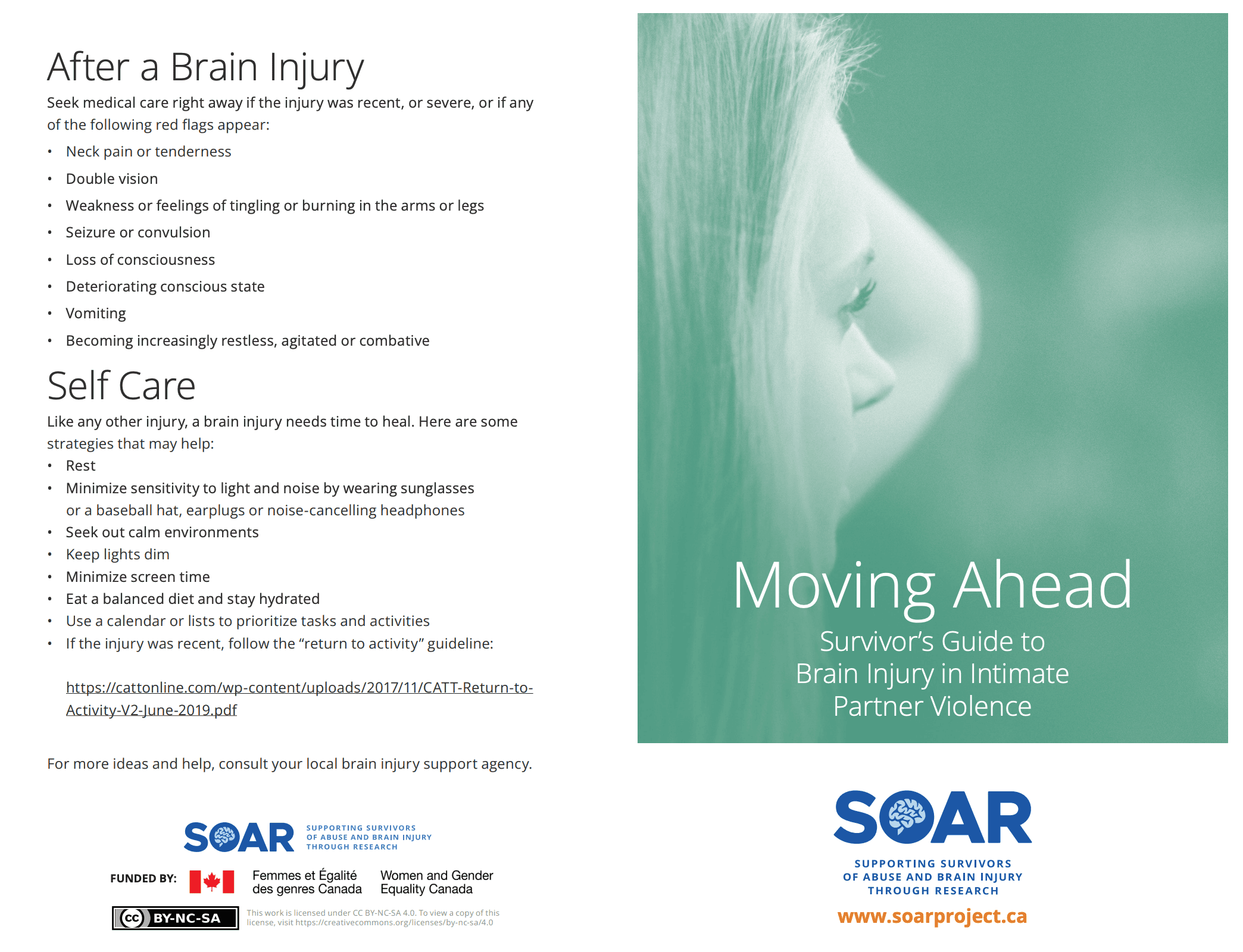
If a partner has hurt you, your brain may have been injured too. Brain injuries caused by intimate partner violence (IPV-BI) can go unnoticed because the signs are not always easy to see. Some symptoms may be mistaken for stress, anxiety, or exhaustion. This free, two-page Moving Ahead: Survivor’s Guide to Brain Injury in Intimate Partner Violence resource explains how abuse can cause brain injury, what signs to look for, and what you can do next. Written in plain language, this illustrated guide offers information you can read at your own pace.
What the guide covers
- What a brain injury is. Learn how a blow or jolt to the head, neck or face, or a loss of oxygen during strangulation or smothering, can injure your brain.
- How abuse can cause brain injury. Understand how being hit, shaken, pushed, or strangled can affect your brain, even when there are no obvious signs of injury.
- Signs and symptoms to watch for. Recognize possible symptoms, including headaches, dizziness, fatigue, sleep problems, mood changes, sensitivity to light or noise, memory difficulties, and trouble concentrating.
- When to seek urgent medical care. Learn which warning signs need immediate attention, including seizures, repeated vomiting, loss of consciousness, double vision, and new weakness or tingling in your arms or legs.
- Caring for yourself while you heal. Explore practical steps to help you manage symptoms while you recover, such as resting in a calm environment, reducing screen time, and using lists or calendars to support memory.
Your symptoms are real. You deserve support.
Brain injuries can affect how you feel, think, remember, and respond to the world around you. These changes may be confusing or frustrating, especially when other people cannot see what you are experiencing.
You are not to blame for what happened to you or for the symptoms you may be experiencing. Understanding the signs of brain injury can help you explain what is happening and seek the care and support you deserve.
When to get medical help: If the injury is recent or severe, or if any of the warning signs above are there, see a doctor right away.
If you have a recent or serious injury, or any warning signs listed in the guide, seek urgent medical care. Some symptoms can signal a serious injury that needs immediate assessment.
This guide provides information, not a diagnosis. A healthcare professional can help assess your symptoms and determine what care you need.
Take the next step
Download the free guide for information you can keep, revisit, or share with someone you trust.
Supporting Survivors of Abuse and Brain Injury through Research (SOAR) is a registered charity and the only Canadian organization dedicated to intimate partner violence-caused brain injury. Through research, education and advocacy, we turn evidence into action.