
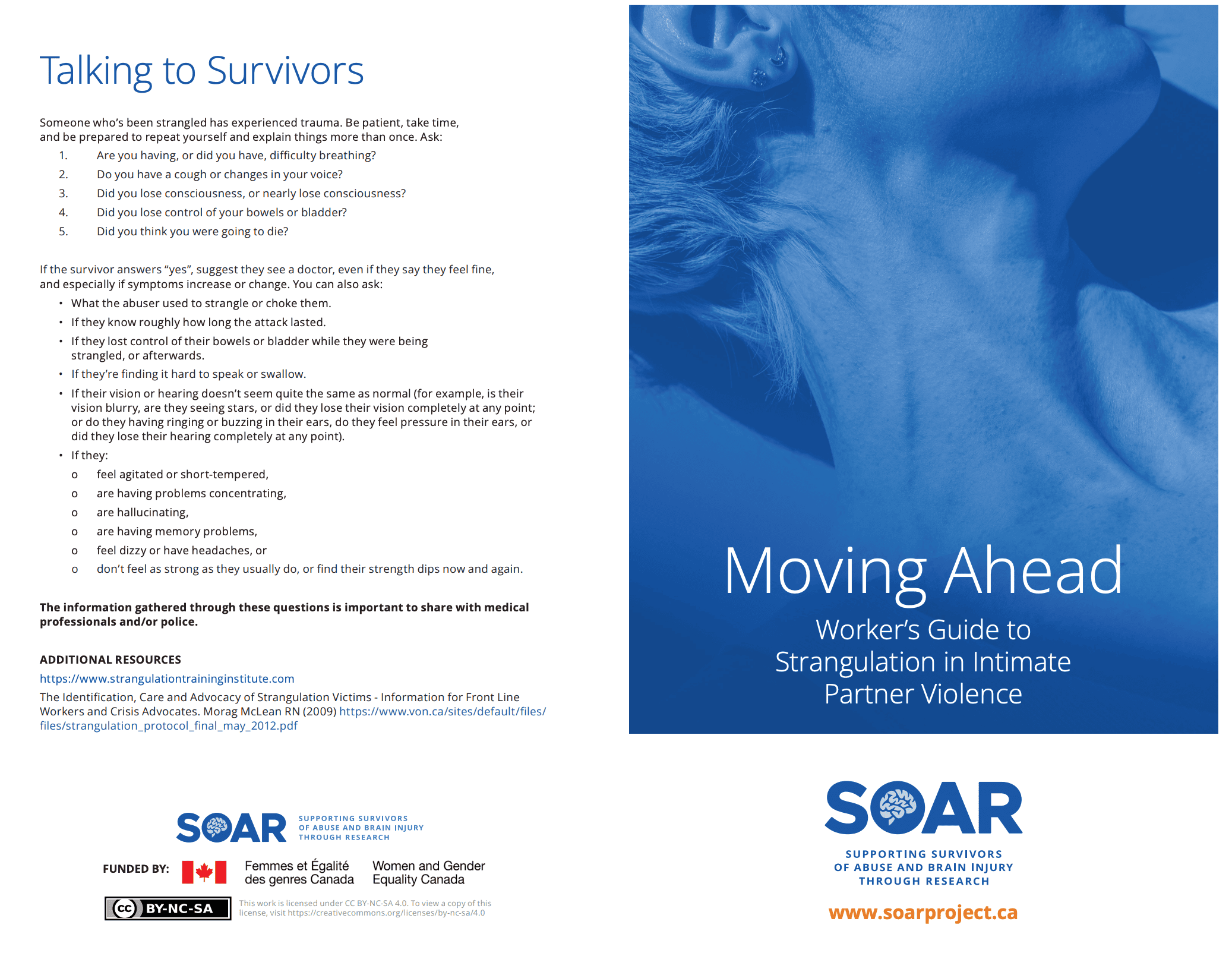
Anyone who has been strangled needs urgent medical assessment – even if there are no visible injuries or they feel fine. Pressure on the neck can cause serious internal injuries and disrupt blood flow and oxygen to the brain. Some complications may not be immediately apparent. More than half of people who experience intimate partner violence may experience strangulation. This free guide helps service providers recognize possible strangulation, ask about it safely, and respond in ways that prioritize survivor safety and health.
What the guide covers
- The risks. Strangulation is a serious form of violence that can cause life-threatening injuries. It is also an important warning sign of future violence and homicide risk: A person who has been strangled is 7.5 times more likely to be killed in a later attack.
- The difference between choking and strangulation. Choking means something is stuck inside the airway. Strangling means pressure on the neck from the outside, cutting off blood and oxygen to the brain. People use the two words for each other. They are not the same thing.
- Signs and symptoms to watch for. Learn what to look for, including a raspy voice, difficulty swallowing or breathing, ringing in the ears, red spots in the eyes or on the skin, scratches or bruises on the neck, chest or shoulders, memory gaps, loss of bladder or bowel control, and blacking out. A survivor may also have no visible signs.
- Five questions to ask. The guide outlines five questions about breathing difficulties, voice changes, loss of consciousness, loss of bladder or bowel control, and whether the survivor feared for their life.
- What to document. Record the survivor's account of what happened, the approximate duration, change in vision or hearing, and any memory or concentration difficulties, following your organization’s documentation and privacy protocols.
Doctors and police need this.
How to have the conversation
Create a calm, private environment where the survivor can speak at their own pace. Ask questions sensitively, listen without judgment, and explain information clearly. Be prepared to repeat or rephrase information as needed.
If a survivor discloses strangulation, encourage urgent medical assessment, even if they feel well. If they have difficulty breathing or swallowing, a change in consciousness, new neurological symptoms, or other severe or worsening symptoms, seek emergency medical care. Call 911 in an emergency.
Strangulation during pregnancy can also pose serious risks to the pregnant person and the pregnancy. Urgent medical assessment is important.
Treat every disclosure as urgent.
Recognize. Respond. Refer.
Download the guide, and keep copies where your team can reach them.
Supporting Survivors of Abuse and Brain Injury through Research (SOAR) is a registered charity and the only Canadian organization dedicated to intimate partner violence-caused brain injury. Through research, education and advocacy, we turn evidence into action.